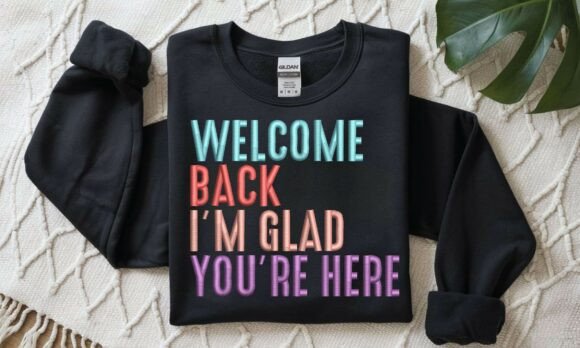
Welcome Back PES DST Embroidery Pattern
In the landscape of custom apparel and branded merchandise, few elements communicate community as effectively as typography. The Welcome Back PES DST Embroidery Pattern represents more than just a digital file; it is a strategic asset for educators, community organizers, boutique brands, and hospitality professionals who need to establish an immediate sense of belonging. This design features a bold, stacked text layout reading "WELCOME BACK I M GLAD YOU RE HERE," executed in a clean block font that balances modern clarity with retro charm.
The visual appeal lies in its specific colorway: a smooth gradient transitioning from bright pastel teal to warm coral red, soft peach, and deep lavender purple. However, the true value of this pattern emerges during the digitization and execution phases. Designed with high-density premium satin-fill lettering and clean running stitch borders, it ensures a crisp, warp-free result on most commercial and home embroidery machines. For professionals managing workflows involving bulk orders or personal creative projects, understanding how to integrate this specific PES and DST format into your production pipeline is essential for efficiency and quality control.
Understanding the Technical Specifications and File Formats
Before integrating the Welcome Back PES DST Embroidery Pattern into any project, it is crucial to understand what these file extensions signify in terms of machine compatibility and workflow integration. The .PES format is the native format for Brother embroidery machines, making it a standard choice for many small business owners and hobbyists who rely on Brother hardware. Conversely, the .DST (Tajima) format is an industry-standard open format widely used in commercial embroidery factories and high-volume production environments.
Having access to both formats allows for greater flexibility in planning. If you are working independently, the PES file will likely be your primary interface. However, if you outsource production to a larger facility or collaborate with other creators who use Tajima or Barudan machines, the DST file ensures seamless compatibility without the need for complex conversion software that might alter the stitch density or tension settings. This dual-format availability reduces friction in the handoff process, whether you are moving from design to production or sharing assets with a team.
The digitization technique employed here—high-density premium satin fill—is particularly relevant for block fonts. Satin stitches create a smooth, lustrous surface by placing long stitches side-by-side, which is ideal for the legibility required in typography. The inclusion of clean running stitch borders further enhances durability, preventing the edges of the letters from fraying or distorting over time, especially after multiple wash cycles. This attention to technical detail ensures that the final product maintains its professional appearance, a critical factor for brand consistency.
Strategic Use Cases Across Different Sectors
The versatility of the "Welcome Back" message makes it applicable across several distinct professional domains. Understanding where this design fits within your broader operational goals can help you maximize its utility.
Educational Institutions and Teacher Branding
For educators, the back-to-school season is a period of high activity and emotional transition. A teacher sweatshirt featuring this embroidery pattern serves as a powerful tool for classroom management and community building. When a teacher wears a garment that explicitly states, "I'm glad you're here," it sets a positive tone before the first bell rings. From a workflow perspective, this design is perfect for creating cohesive staff uniforms or volunteer appreciation gifts. The retro-inspired gradient adds a touch of personality without being overly distracting, ensuring the focus remains on the welcoming message.
Boutique Lounges and Hospitality Staff
In the hospitality sector, first impressions are everything. Boutique hotels, cafes, and co-working spaces often struggle to balance professionalism with warmth. Custom aprons or graphic tees embroidered with this pattern allow staff to embody the brand's voice instantly. The vibrant color palette mirrors the inviting atmosphere these businesses strive to create. For managers, ordering pre-embroidered uniforms with this design streamlines the onboarding process for new hires, providing them with branded gear that reinforces their role as hosts rather than just employees.
Counseling and Community Centers
For counselors, social workers, and community leaders, the environment must feel safe and inclusive. Decorative pillows or wall hangings featuring this embroidery pattern can transform a sterile office into a comforting space. The soft pastel tones and warm message contribute to a calming aesthetic. In terms of implementation, these items serve as tangible reminders of support for clients, subtly reinforcing the therapeutic alliance.
Integration into Production Workflows
Successfully using the Welcome Back PES DST Embroidery Pattern requires careful preparation and adherence to best practices in embroidery digitization and stitching. Here is how to integrate this asset smoothly into your workflow.
Preparation and Hooping Strategy
The success of any embroidery project begins with fabric selection and hooping. Because this design utilizes high-density satin fills, it requires a stable base to prevent puckering. Choose fabrics with enough body, such as cotton blends, fleece, or structured canvas, depending on the end product. Avoid overly stretchy or thin materials unless you use stabilizers appropriately. For items like tote bags or aprons, consider using cut-away stabilizer to provide permanent support, ensuring the dense stitching does not distort the fabric structure over time.
Thread Management and Color Sequencing
The gradient effect in this design relies on precise thread sequencing. Ensure your machine’s thread stand is organized to match the color transitions specified in the digitized file. The transition from teal to coral, peach, and lavender requires smooth needle changes to avoid visible gaps or misalignments. If you are producing multiple units, batch your thread colors to minimize downtime. Additionally, inspect the spools for consistency; variations in dye lots between different manufacturers can disrupt the intended gradient effect, so sourcing threads from the same batch is advisable for large runs.
Quality Control and Tension Adjustments
Before committing to a full production run, always perform a test stitch-out on scrap material. Check for tension issues, particularly at the transitions between colors. High-density designs can sometimes pull too tightly if the top tension is set incorrectly, leading to thread breaks or fabric distortion. Adjust the tension as needed to ensure the satin stitches lie flat and even. Inspect the running stitch borders for cleanliness; they should frame the design neatly without loose threads or backtracking errors.
Long-Term Value and Maintenance
Investing in high-quality digitization pays dividends in longevity. The Welcome Back PES DST Embroidery Pattern is designed for durability, but proper care instructions should be communicated to end-users to maintain the integrity of the embroidery. Washing garments inside out on a gentle cycle and avoiding direct ironing on the stitched areas will preserve the vibrancy of the colors and the shape of the stitches.
Furthermore, keeping a record of successful settings for this specific pattern allows for faster setup in future projects. Documenting the optimal hoop type, stabilizer weight, and thread brand creates a knowledge base that improves efficiency over time. This systematic approach to asset management transforms a simple embroidery file into a reusable component of your creative or business infrastructure.
Ultimately, the Welcome Back PES DST Embroidery Pattern is more than a decorative element; it is a functional tool for communication. By understanding its technical requirements and strategic applications, you can leverage this design to enhance user experience, strengthen brand identity, and foster a genuine sense of connection in your projects. Whether you are preparing for the school year, launching a new service line, or simply adding a personal touch to your wardrobe, this pattern offers a reliable, visually striking solution that aligns with professional standards and heartfelt intent.