Custom Classroom Door Hanger SVG
The modern educator’s workspace is often an extension of their digital workflow. From lesson planning to parent communication, teachers manage a complex ecosystem of resources that require precision, personalization, and efficiency. In this context, Custom Classroom Door Hanger SVG files represent more than just decorative assets; they are functional components of classroom management and community building. By leveraging vector-based design files, educators can transition from generic store-bought decorations to personalized environments that reflect their specific teaching identity.
This article explores how integrating personalized SVG designs into your classroom setup fits into the broader process of educational environment design. We will examine the technical aspects of these files, their practical applications in physical production, and how they contribute to a cohesive, welcoming learning atmosphere.
Understanding the Asset: What Is a Custom Classroom Door Hanger SVG?
An SVG (Scalable Vector Graphics) file is a digital image format that uses mathematical equations to define shapes, lines, and colors. Unlike raster images (such as JPEGs or PNGs), which consist of pixels and lose quality when resized, SVGs remain crisp at any scale. For a teacher creating a door hanger, this means the design can be scaled from a small name tag to a large wall display without pixelation.
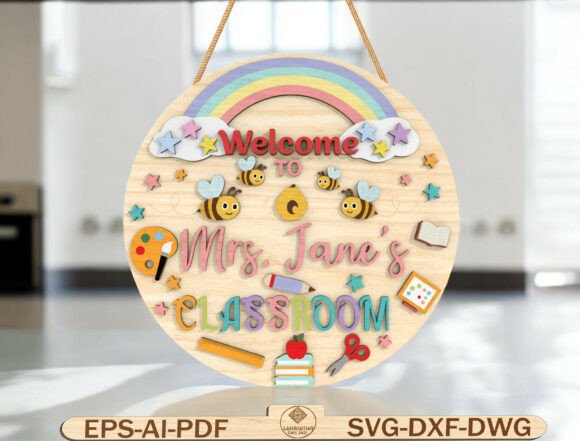
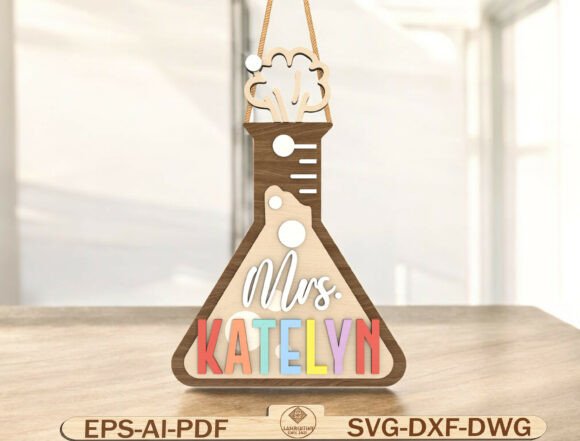
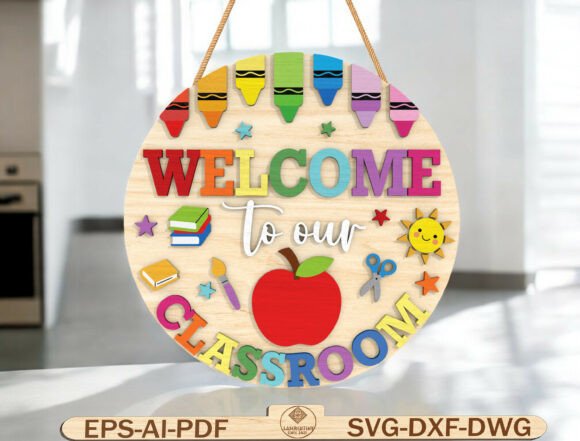
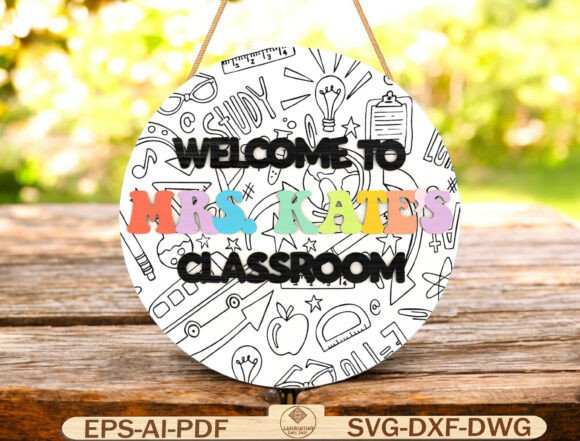
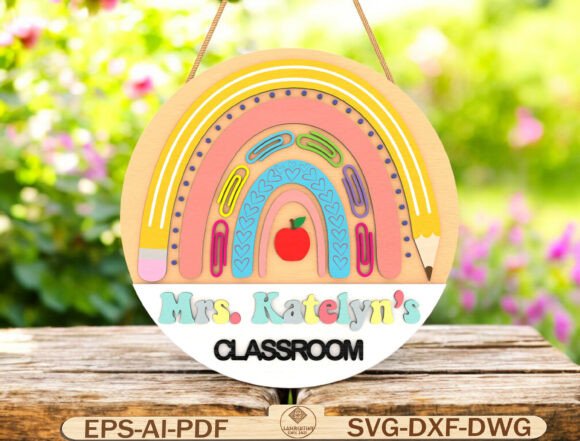
The specific design described—a "Personalized Rainbow Pencil Teacher SVG Sign"—features layered elements that allow for depth and customization. The key components include:
- Layered Geometry: The rainbow pencil motif is not a single flat image but a collection of distinct paths. This allows for multi-material construction, such as painting each pencil stripe a different color.
- Text Integration: The customizable teacher name is embedded as editable text layers. This ensures that fonts can be changed or names updated easily before cutting.
- Structural Format: The round sign format provides a clean, unified shape that works well for hanging displays, avoiding sharp corners that might catch on door frames.
Understanding the structure of the file is crucial for successful implementation. It transforms the design from a static picture into a set of instructions for a manufacturing process, whether that process involves a laser cutter, a CNC machine, or manual hand-cutting with a craft knife.
Workflow Integration: From Digital File to Physical Display
Integrating a Custom Classroom Door Hanger SVG into your back-to-school preparation requires a systematic approach. The value lies not just in the final product, but in the efficiency gained by having a reusable, adaptable template.
Preparation and Software Compatibility
The first step in the workflow is ensuring software compatibility. The included formats—SVG, DXF, EPS, AI, PDF, and DWG—cover the vast majority of design and cutting software ecosystems. If you use Cricut Design Space or Silhouette Studio, the SVG or DXF files will import directly. For those using professional tools like Adobe Illustrator or CorelDRAW, the AI and EPS files provide full editability.
Before sending the file to a cutting machine, verify the following:
- Layer Separation: Check that the rainbow stripes and the text are on separate layers. This allows you to assign different materials or colors to each part during the design phase.
- Text Conversion: While some machines can read text directly, it is often safer to convert text to outlines (paths) to ensure the font renders exactly as intended, regardless of the computer’s installed fonts.
- Nesting and Scaling: Use the software’s nesting feature to arrange multiple copies of the design efficiently if you are producing signs for multiple classrooms or staff members. This minimizes material waste.
Material Selection and Preparation
The choice of substrate significantly impacts the final aesthetic and durability of the door hanger. Common options include:
- MDF (Medium Density Fiberboard): Ideal for painting. MDF takes paint evenly and holds screws or nails well for hanging mechanisms. It is cost-effective and widely available.
- Balsa Wood: Lighter weight, making it easier to hang on doors without heavy-duty hardware. It has a soft grain that accepts stain beautifully.
- Plywood: Offers a natural wood look with visible grain layers. It is durable and adds a rustic charm to the classroom décor.
- Acrylic: For a modern, sleek look, clear or colored acrylic sheets can be cut using the SVG. This creates a vibrant, translucent effect when light hits the rainbow pencils.
Regardless of the material, ensure it is sanded smooth (if wood) or cleaned (if acrylic) before assembly. Consistency in surface preparation leads to a higher-quality finish.
Cutting and Assembly Process
When executing the cut, pay attention to blade depth and speed settings. For intricate details like the eraser or ferrule of the pencil, slower speeds may prevent burning or tearing. After cutting, remove all small interior pieces (kiss-cutting removal). This step requires patience but is essential for a clean look.
Assembly involves layering the painted or stained components. Use strong adhesive, such as wood glue or double-sided foam tape, to create depth. The "rainbow" effect is achieved by stacking the colored pencil segments. Finally, attach a hanging mechanism. A simple ribbon loop or a D-ring attached to the back ensures the sign hangs securely and level on the classroom door.
Strategic Applications in Educational Settings
The utility of a Custom Classroom Door Hanger SVG extends beyond simple decoration. It serves as a tool for branding, organization, and emotional connection within the school environment.
Classroom Identity and Branding
In elementary and preschool settings, visual cues help students navigate their day. A personalized door hanger acts as a landmark. When students see their teacher’s name in a cheerful, recognizable format, it reduces anxiety and builds a sense of belonging. For teachers who rotate classrooms or teach multiple grades, having a standardized yet personalized design system maintains consistency across different spaces.
Teacher Appreciation and Professional Gifts
For administrators, parent-teacher associations, or fellow colleagues, creating custom signs is a meaningful gesture. Because the SVG file is digital, it can be shared instantly. A principal can send the file to a volunteer with a Cricut, who can then produce a gift for the entire faculty. This scalability makes the SVG format highly efficient for bulk production of appreciation gifts, allowing for personalization without individual design work for each recipient.
Seasonal Adaptability
While the rainbow pencil theme is timeless, the underlying technology allows for easy adaptation. The same round sign structure can accommodate seasonal changes. For example, the pencil graphics could be replaced with autumn leaves for fall, snowflakes for winter, or flowers for spring. The core workflow remains the same: update the graphic layers, re-export the SVG, and cut new materials. This flexibility maximizes the return on investment for the initial design purchase.
Quality Control and Best Practices
To ensure the final product meets professional standards, consider these best practices:
- Test Cuts: Always perform a test cut on scrap material to verify blade alignment and adhesion strength. This prevents damage to the primary material.
- Color Matching: If painting, create a sample swatch to match the desired "rainbow" colors accurately. Acrylic paints tend to darken slightly as they dry, so account for this shift.
- Edge Finishing: Laser-cut edges on wood can sometimes appear charred. Sanding these edges lightly with fine-grit sandpaper restores a natural, polished appearance.
- Digital Archiving: Save the final edited SVG file with the teacher’s name in a clearly labeled folder (e.g., "Teacher_Name_Class_5_Sign"). This creates a library of assets that can be reused for future years or replicated for other staff members.
Conclusion
Integrating a Custom Classroom Door Hanger SVG into your workflow bridges the gap between digital creativity and tangible classroom experience. By understanding the technical properties of vector files and applying a structured approach to material selection and assembly, educators can create high-quality, personalized décor that enhances the learning environment. Whether used for back-to-school welcomes, teacher appreciation initiatives, or ongoing classroom branding, these designs offer a scalable solution for adding warmth and personality to educational spaces. The result is not just a sign, but a deliberate element of classroom culture that supports both teacher identity and student engagement.