Creating a Lasting Impression: The Art of the 3D Pop Out Teacher Thank You Card SVG
Education is a profession built on connection, patience, and inspiration. As the school year draws to a close or as a gesture of gratitude during the middle of the term, finding the right way to express appreciation can be challenging. While store-bought cards are convenient, they often lack the personal touch that truly resonates with educators. This is where the Teacher Thank You Card SVG, 3D Pop out design comes into play, offering a sophisticated yet accessible solution for crafters, parents, and students alike.
The intersection of digital cutting technology and traditional paper crafting has revolutionized how we create greeting cards. By leveraging layered vector designs, creators can produce intricate, three-dimensional structures that jump off the page. This article explores the practical applications, technical advantages, and creative possibilities of using 3D pop-out templates to honor teachers, ensuring your gift stands out in a sea of standard folded cards.
Understanding the Digital Craft Ecosystem
Before diving into the specific mechanics of card assembly, it is essential to understand the tools that make this possible. Modern crafting relies heavily on software compatibility. When you purchase a digital template, you are not just buying an image; you are acquiring a set of instructions for a machine. The most common formats include SVG (Scalable Vector Graphics), DXF (Drawing Exchange Format), EPS (Encapsulated PostScript), and PDF (Portable Document Format).
SVG files are the gold standard for users of Cricut and Silhouette machines. These files contain path data that allows the cutting blade to follow precise lines without pixelation, regardless of size. For laser cutters, which use light rather than physical blades, DXF and EPS files are often preferred due to their precision in handling complex curves and fine details. Meanwhile, PDF and PNG files serve as printable guides for those who prefer hand-cutting or gluing, providing visual references for layering and alignment.
The versatility of these formats ensures that whether you are a professional graphic designer, a hobbyist with a basic cutting machine, or a teacher looking to engage students in STEM-related art projects, there is a pathway to creation. The 3D square pop out card template mentioned in our source material is designed specifically to accommodate this multi-format workflow, ensuring that the structural integrity of the design remains intact across different production methods.
The Anatomy of a 3D Pop Out Design
What distinguishes a 3D pop-out card from a flat greeting card is the concept of layering. In digital terms, this means breaking down a single image into multiple distinct shapes, each representing a different depth plane. A typical layered square card design might consist of ten to twenty individual pieces, ranging from the background base to the foreground embellishments.
In the context of a Teacher Thank You Card SVG, 3D Pop out, these layers are not random. They are carefully orchestrated to create visual hierarchy and thematic coherence. Common elements include:
- The Base Layer: Usually a solid color cardstock that provides the structural foundation and envelope fit.
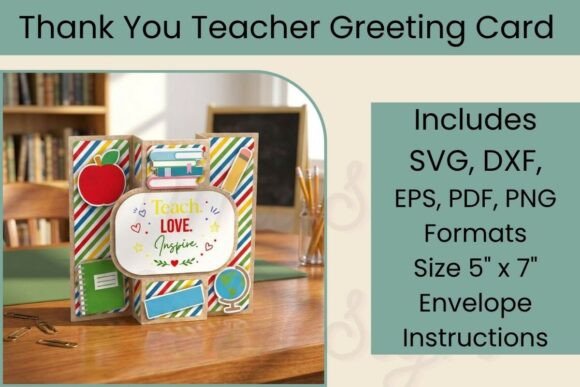
- The Middle Ground: Often features larger silhouettes such as a globe, a stack of books, or a large apple. These elements provide context and color blocking.
- The Foreground: Contains smaller, detailed items like pencils, rulers, notebooks, and text elements. These are typically placed on raised tabs or foam pads to create physical depth.
This stratification mimics real-world perspective. By physically separating these elements, the card gains dimensionality. When opened, the layers unfold in a sequence, creating a dynamic reveal that engages the recipient. This is particularly effective for themes like "Teach, Love, Inspire," where the text itself can be part of the layered structure, emerging prominently at the center of the composition.
Practical Applications and Use Cases
The utility of these digital templates extends far beyond a single occasion. While the primary intent is often end-of-year appreciation, the modular nature of the design allows for various adaptations throughout the academic calendar.
Teacher Appreciation Week
During the first week of May, schools worldwide celebrate educators. A handmade 3D card adds a tangible element of effort and care that mass-produced gifts cannot match. Parents can assemble these cards in batches, utilizing the included envelope template to ensure a polished finish. The colorful school-themed elements—apples, books, and globes—serve as universal symbols of education, making the message clear and celebratory.
End of School Year Farewells
As the final bell rings, students often seek ways to say goodbye to their mentors. For older students, assembling a complex 3D card can be a meaningful capstone project. It requires planning, precision, and patience—skills that mirror the learning process itself. For younger children, the activity can be simplified by pre-cutting certain layers, allowing them to focus on the assembly and decoration aspects.
Back-to-School Welcome Gifts
Interestingly, these designs are not limited to thank-you gestures. Teachers often receive small tokens of welcome from parents at the start of the year. A compact 3D card featuring a pencil or notebook motif can serve as a charming introduction, signaling a collaborative partnership between home and school.
Technical Considerations for Successful Assembly
While the digital file provides the blueprint, the physical result depends on material selection and assembly technique. To achieve the best results with a layered square card design, consider the following factors.
Material Selection
The choice of paper stock significantly impacts the durability and aesthetic of the pop-out mechanism. Standard printer paper is too thin to support the weight of multiple layers without sagging. Instead, opt for cardstock ranging from 80lb to 110lb cover weight. Heavier cardstocks hold creases better and provide a sturdier base for the 3D effect. Additionally, varying the colors of the cardstock layers can enhance contrast, making the foreground elements pop against the background.
Cutting Precision
For those using Cricut or Silhouette machines, calibration is key. Ensure your mat is clean and your blades are sharp. Dull blades can tear delicate details, such as the teeth of a ruler or the spiral binding of a notebook, leading to frustration during assembly. If you are using a laser cutter, adjust the power settings according to the thickness of your material to prevent scorching while ensuring complete cuts.
Assembly Strategy
The assembly instructions provided in the download are crucial, but general principles apply to all layered designs. Always work from the back to the front. Glue the largest background layers first, then move to the middle ground, and finally attach the foreground elements. Using foam adhesive dots or double-sided tape spacers between layers creates the necessary gap for the 3D pop-out effect. Without these spacers, the card will lie flat, losing its dimensional impact.
Customization and Personalization
One of the greatest advantages of using SVG and vector-based templates is the ability to customize. Unlike fixed-print cards, digital files allow you to modify text, colors, and even some graphic elements before cutting.
Most vector editing software, such as Adobe Illustrator or free alternatives like Inkscape, allows you to open the EPS vector files and edit the text layers. You can change "Thank You" to "Best Wishes" or insert the teacher's name directly into the design. This level of personalization transforms a generic craft project into a bespoke gift. Furthermore, you can experiment with color palettes. While red and green are classic school colors, shifting to pastels, metallics, or the school’s official colors can align the card with specific classroom themes or seasonal aesthetics.
Environmental and Economic Benefits
In an era where sustainability is a growing concern, digital crafting offers distinct environmental advantages. By downloading a Teacher Thank You Card SVG, 3D Pop out, you eliminate the carbon footprint associated with manufacturing, packaging, and shipping physical cards. You only use the exact amount of paper needed for your project, reducing waste.
Economically, the cost-effectiveness is undeniable. A single digital download can be used to create dozens of cards. For teachers running classroom parties or parents organizing group gifts, this scalability makes high-quality, handmade presentations financially feasible. The initial investment in a cutting machine pays for itself quickly when compared to the recurring cost of purchasing premium greeting cards.
Conclusion
The creation of a 3D pop-out teacher thank you card is more than just a craft project; it is a testament to the value placed on education. By combining modern digital tools with traditional paper arts, creators can produce gifts that are visually striking, emotionally resonant, and deeply personal. Whether you are using a Cricut, a Silhouette, or a laser cutter, the 3D square pop out card template provides a robust framework for expression. With careful attention to material selection, cutting precision, and assembly technique, anyone can transform simple sheets of paper into memorable tributes for the educators who inspire us daily.
As you embark on your next crafting session, remember that the true value lies not in the complexity of the design, but in the thoughtfulness behind it. The layered elements, the vibrant colors, and the tactile experience of opening the card all contribute to a moment of genuine connection. In a digital world, holding something tangible crafted with care is a powerful reminder of the human connections that underpin our educational systems.